Bug Bite Types: A Visual Identification Chart
Educational only. This chart helps you compare bug bite types — it is not medical advice. See a professional for severe or worsening reactions.
Different bugs leave different marks. This bug bite identification chart compares the most common bug bite types side by side — by what they look like, the pattern they form, where they appear on the body, and how they feel — so you can narrow down what bit you at a glance.
Want a faster shortcut? Try the bug bite identifier by photo — upload a picture and let the AI match it against 1000+ species instantly.
Want an instant answer?
Instead of comparing charts, snap a photo and let the AI identify your bite in seconds.
Identify my bite — free appThe bug bite identification chart
Compare the most common bites across four clues. Read it left to right for any single bug, or scan a single column — for example the Pattern column — when you already know what your bites look like.
| Bug | Looks like | Pattern | Where on body | How it feels |
|---|---|---|---|---|
| Mosquito | Puffy round welt with a pale center | Single, scattered randomly | Any exposed skin | Itchy almost immediately |
| Bed bug | Small flat red bumps, sometimes a dark center | Line or zigzag of 3+ | Arms, shoulders, neck, face | Itchy, noticed on waking |
| Flea | Tiny red dots with a reddish halo | Tight cluster, short rows | Ankles, lower legs, feet | Very itchy quickly |
| Tick | Tick may still be attached; possible expanding bullseye | Single | Scalp, groin, waistband, behind knees | Usually painless |
| Spider | Two tiny puncture marks; may swell or blister | One or two together | Anywhere, often arms or legs | Pain, itch, or nothing at first |
| Chigger | Small bright red welts or bumps | Cluster along clothing lines | Ankles, sock line, waistband | Intensely, persistently itchy |
| Ant (fire ant) | Red bump turning into a white pustule | Cluster of several | Feet and legs | Burning sting, then itch |
| Bee / wasp sting | Swollen red welt, may have a central point | Single sting | Anywhere, often hands or feet | Sharp pain instantly |
Reading the pattern first: a line or zigzag usually means bed bugs · a tight cluster low on the legs often means fleas or chiggers · a single painful sting points to a bee, wasp, or ant · a random, scattered bump is most often a mosquito.
How to use the chart to narrow it down
Start with the pattern — it's the single most distinctive clue. Then confirm with where the bites are on your body and what they look like up close. A few quick questions usually get you there:
- Are they in a line or zigzag on the upper body, noticed when you woke up? Lean toward bed bugs.
- Are they clustered low on the ankles and legs? Lean toward fleas or chiggers.
- Is it a single puffy welt that itched within minutes? Most likely a mosquito.
- Was there an instant sharp or burning pain? Think bee, wasp, or fire ant.
- Is it painless with a growing ring around it? Check for an attached tick.
For the full walkthrough with pictures of each bite, see our complete bug bite identification guide.
Odd bite patterns: line, cluster, triangle & 4 dots
The shape and grouping of your bites is often more telling than a single bump. Here's what the common patterns usually mean:
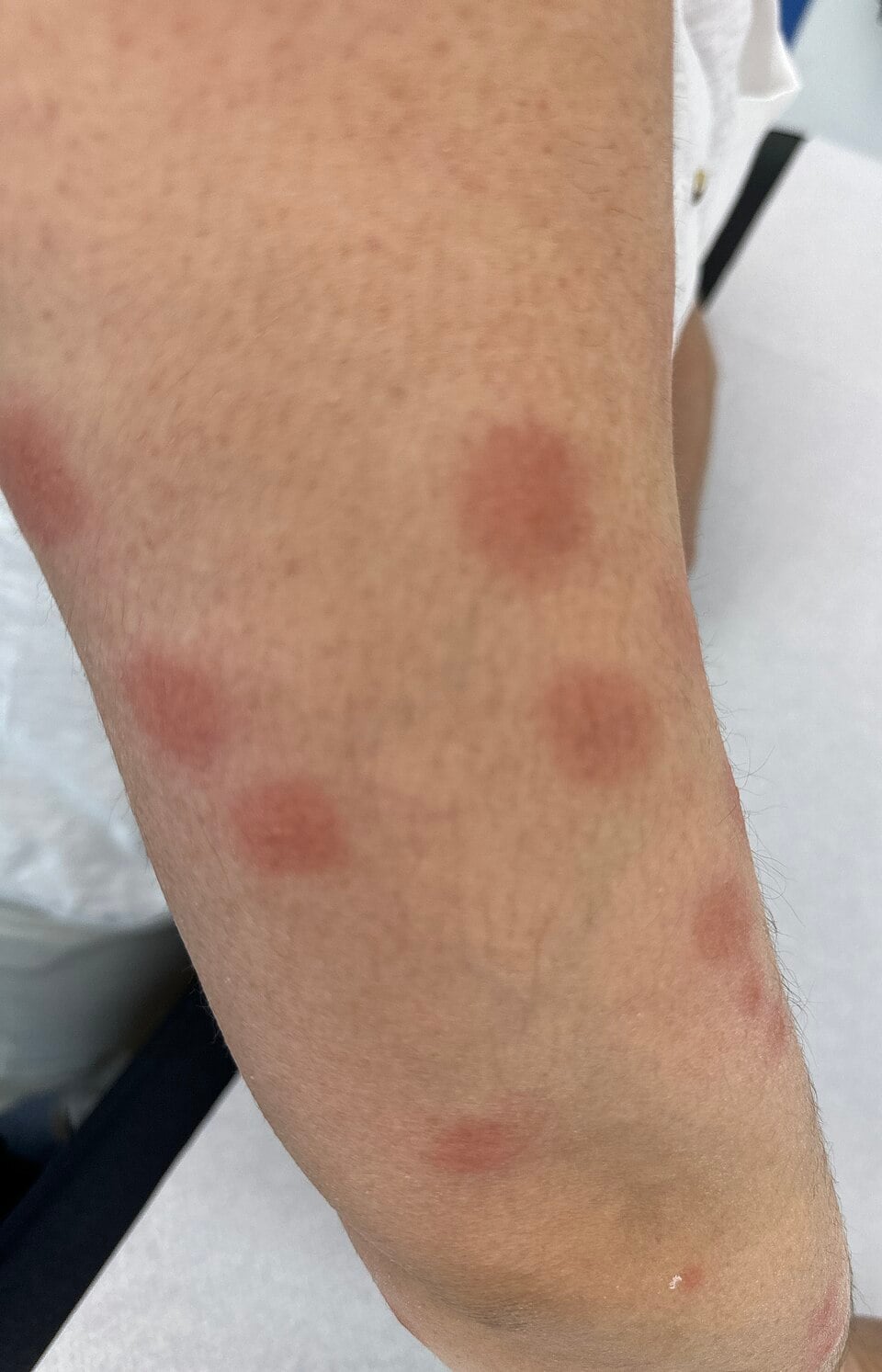
- A line or zigzag — three or more evenly spaced bites in a row most often means bed bugs feeding along the skin (the "breakfast, lunch and dinner" pattern). Fleas can also leave short rows lower on the legs.
- A tight cluster — many bites grouped in one area points to fleas, chiggers, or mites, especially around the ankles, sock line, or waistband.
- A triangle or 3 dots — three bites close together in a rough triangle are most often bed bugs, with fleas and chiggers also possible. The shape alone doesn't prove which bug it was, so confirm with location and signs of bugs.
- 4 dots in a square — a small square or boxy group is just clustered feeding (commonly bed bugs or fleas), not a specific "spider in a square" myth.
- Random and scattered — single bumps spread across exposed skin with no clear order are typically mosquitoes.
Pattern isn't proof. A line strongly suggests bed bugs, but you confirm bed bugs by finding the insects or rust-colored spots in mattress seams — not by the bite shape alone.
See every pattern drawn out, with the bugs that usually cause it and when to see a doctor: bug bites in a triangle, line or 4 dots.
Common bug bites and what they look like
A quick rundown of each bite, with a link to the full guide for pictures and treatment:
- Mosquito: puffy, round, pale-centered welts that itch fast and appear on any exposed skin. See mosquito bite identification.
- Bed bug: small red bumps in a line or zigzag on the arms, shoulders, and neck, noticed on waking. See bed bug bite identification — or, for the most common mix-up, bed bug bites vs. mosquito bites.
- Flea: tiny red dots with a halo, clustered around the ankles and lower legs, very itchy. See flea bite identification.
- Tick: often painless, may have the tick still attached or an expanding bullseye rash. See tick bite identification.
- Spider: one or two puncture marks that may swell or blister; most are harmless. See spider bite identification.
- Chigger: intensely itchy red welts in clusters along tight clothing lines. See chigger bite identification.
Save or share this bug bite chart
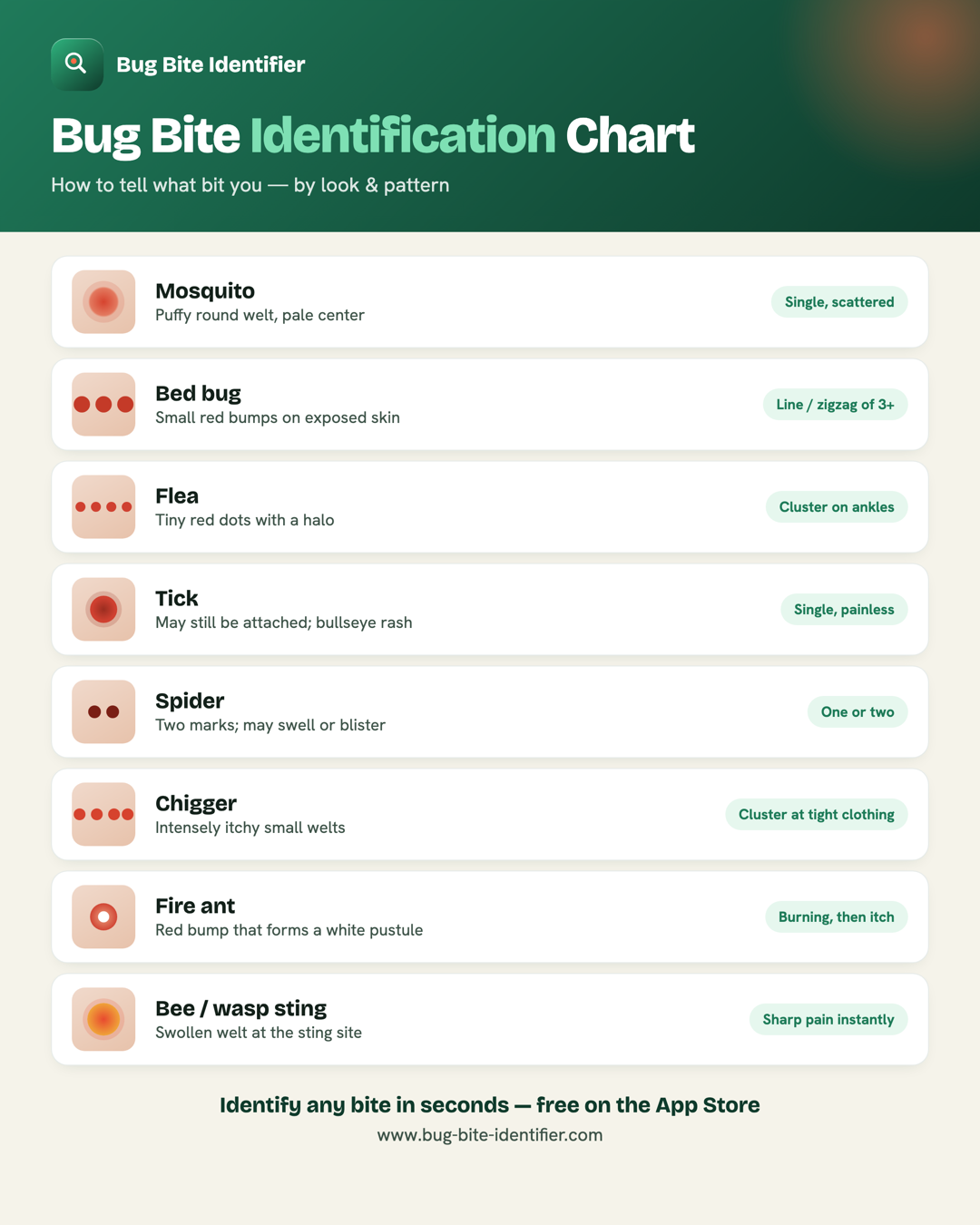
Bookmark this page or save the chart below — handy for the next time you're not sure what bit you. Pin it, print it, or share it.
When bug bites need a doctor
Most bug bites clear up on their own, but get medical help right away for signs of a serious allergic reaction — trouble breathing, swelling of the face, lips, or throat, dizziness, or a fast spreading rash. Also see a doctor for:
- A spreading bullseye rash or flu-like symptoms in the days after a tick bite.
- A bite that becomes increasingly painful, warm, swollen, or pus-filled (possible infection).
- A blistering, darkening, or rapidly worsening wound from a suspected spider bite.
- Many bites with a strong whole-body reaction.
Identify any bite in seconds
The Bug Bite Identifier app compares your photo against 1000+ species and gives care tips for each result.
Download on the App StoreFAQ
How do I identify a bug bite?
Start with the pattern, the most distinctive clue: a line or zigzag points to bed bugs, a tight cluster low on the legs points to fleas or chiggers, and a single painful sting points to a bee, wasp, or ant. Then confirm with appearance and where it is on the body. Use the chart above to narrow it down.
What do different types of bug bites look like?
Mosquito bites are puffy round welts that itch fast; bed bug bites are small red bumps in a line; flea bites are tiny red dots with a halo around the ankles; chigger bites are intensely itchy welts at the sock or waistband line; tick bites are often painless and may show a bullseye; spider bites can show two marks and may blister; ant and bee/wasp stings cause an instant burning or sharp pain.
What does a triangle or 3-dot bite pattern mean?
A small triangle or group of three bites close together is most often bed bugs feeding repeatedly along the skin — the "breakfast, lunch and dinner" pattern. Three dots in a rough triangle aren't a reliable sign of any single species, so confirm with location (upper body, noticed on waking) and physical signs of bugs.
What does a line of bug bites mean?
A straight line or zigzag of three or more evenly spaced bites usually means bed bugs, which feed several times as they move along exposed skin. Fleas can also leave short rows lower on the legs. A line is a strong clue but not proof; check mattress seams for bugs to confirm bed bugs.
When should bug bites be seen by a doctor?
Seek care for signs of an allergic reaction such as trouble breathing, swelling of the face or throat, or dizziness; a spreading bullseye rash or flu-like symptoms after a tick bite; a bite that becomes increasingly painful, warm, or pus-filled; or any blistering, darkening wound from a suspected spider bite.