Tick Bite Identification: Pictures, Bullseye Rash & Safe Removal
Educational only. Not medical advice. Tick bites can transmit disease — if you develop a bullseye rash, fever, or flu-like symptoms, contact a healthcare professional promptly.
Tick bites are easy to miss — they're usually painless, and the tick may still be attached when you find it. What matters most is removing the tick correctly and watching for warning signs in the weeks afterward. Here's how.
Found a bite but not sure it's a tick? Our free bug bite identifier identifies bites by photo in seconds.
What does a tick bite look like?
A tick bite is usually a single, small red bump and is often painless, so it can go unnoticed. Frequently the tick is still attached to the skin when you find it. Ticks prefer warm, hidden areas — the scalp and hairline, behind the ears, armpits, groin, behind the knees, and along the waistband.
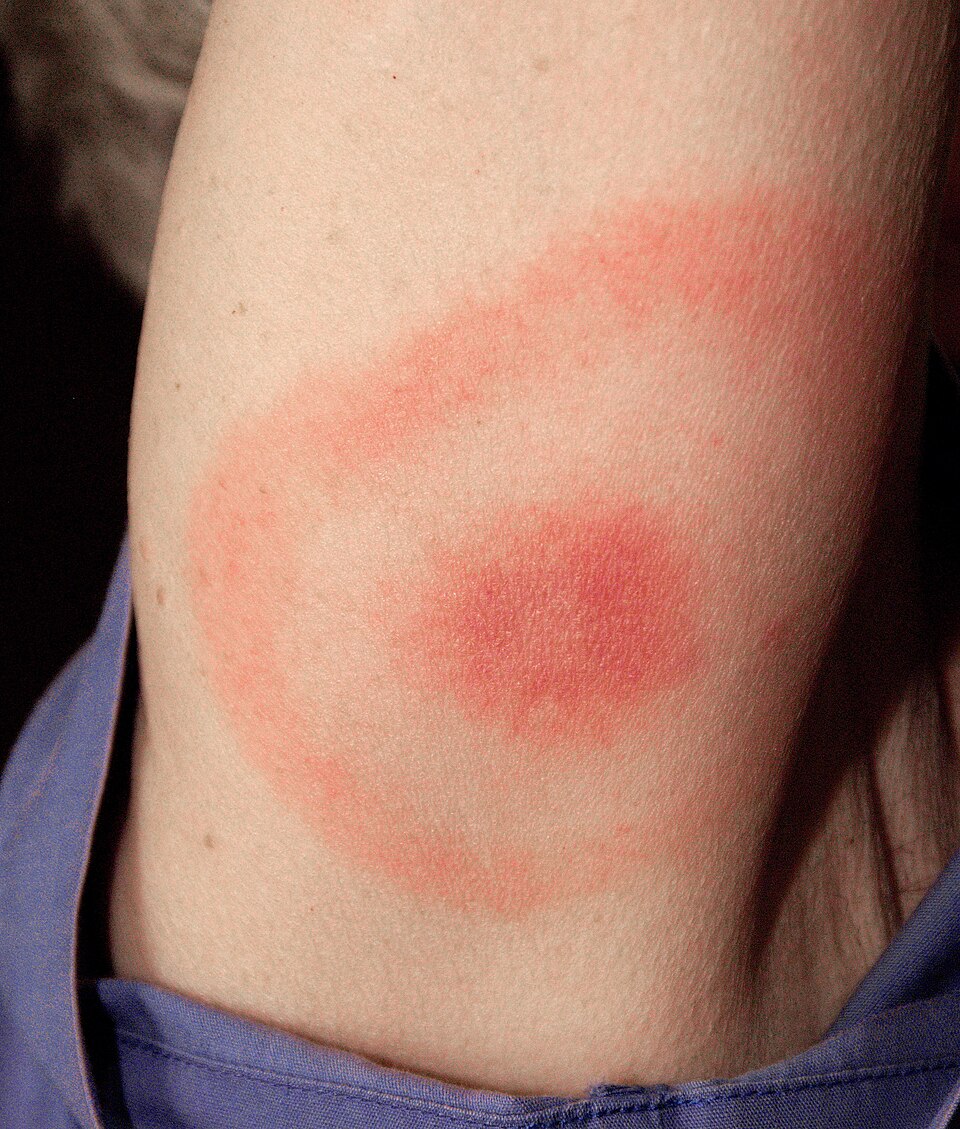
The most important warning sign: an expanding circular or "bullseye" rash (a red ring with a clearing center) appearing days to weeks after a bite can be a sign of Lyme disease. If you see one — or develop fever, fatigue, or aches — see a doctor promptly.
How to remove a tick safely
Remove an attached tick as soon as you find it — the longer it stays, the higher the disease risk.
- Use fine-tipped tweezers to grasp the tick as close to the skin's surface as possible.
- Pull straight up with steady, even pressure. Don't twist, jerk, or crush the tick's body.
- Clean the bite area and your hands with soap and water or rubbing alcohol.
- Dispose of the tick by sealing it in tape or a bag, or flushing it. Some people save it in case a doctor wants to identify it.
Avoid folk methods — petroleum jelly, nail polish, heat, or "painting" the tick don't work and can make it worse. Note the date so you can track symptoms.
Found the tick or the bite?
Use the app to identify the tick and learn its risk profile — it covers 1000+ species with danger ratings.
Identify it — free appTick bite warning signs — see a doctor if you have:
- An expanding bullseye or circular rash around the bite.
- Fever, chills, fatigue, headache, or muscle and joint aches.
- A tick that was attached for more than 24–36 hours, or that you couldn't fully remove (mouthparts left behind).
- A bite area that becomes increasingly red, warm, swollen, or painful (possible infection).
Tick-borne illnesses (such as Lyme disease) are very treatable when caught early — which is why monitoring the bite matters.
How to avoid tick bites
When in grassy or wooded areas, wear long sleeves and pants, tuck pants into socks, use repellent, stay on trails, and do a full-body tick check (including hair and skin folds) when you get home. Shower soon after being outdoors.
FAQ
What does a tick bite look like?
Usually a single small red bump, often painless, with the tick possibly still attached. Watch for an expanding bullseye rash afterward, which can signal Lyme disease.
How do I safely remove a tick?
Grasp it with fine-tipped tweezers as close to the skin as possible and pull straight up with steady pressure — don't twist or crush it. Clean the area afterward and monitor it.
When should I see a doctor after a tick bite?
If you develop a bullseye rash, fever, fatigue, or aches, can't fully remove the tick, or it was attached more than 24–36 hours.