Chigger Bite Identification: Pictures & How to Treat the Itch
Educational only. Not medical advice. See a professional for severe reactions or signs of infection.
Chigger bites are famous for one thing: a fierce, maddening itch. They show up as clusters of small red welts, usually right where your clothing fits snugly. Here's how to confirm it's chiggers, calm the itch, and tell them apart from other bites.
Not certain it's chiggers? Our free bug bite identifier can identify the bite by photo in seconds before you read on.
What do chigger bites look like?
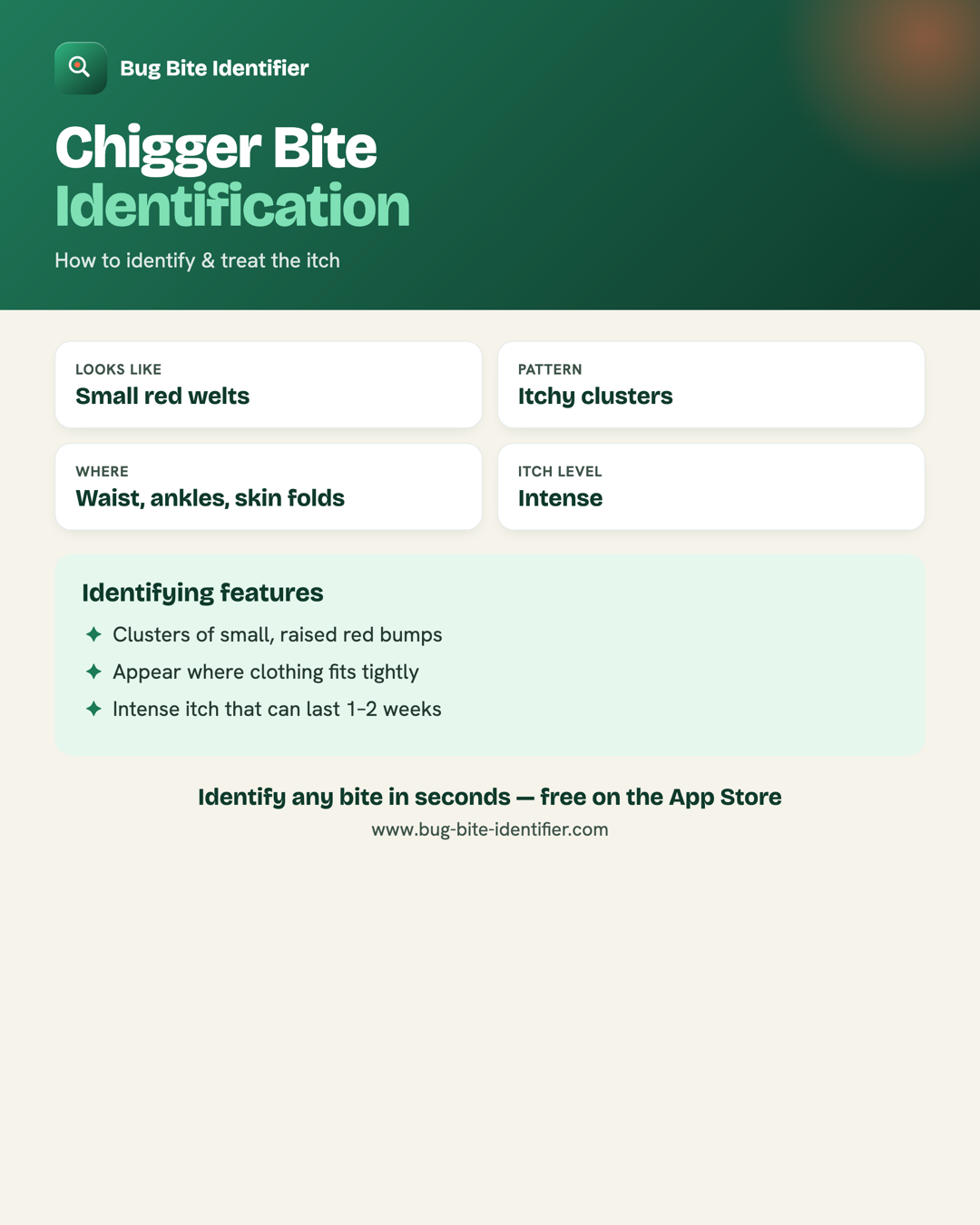
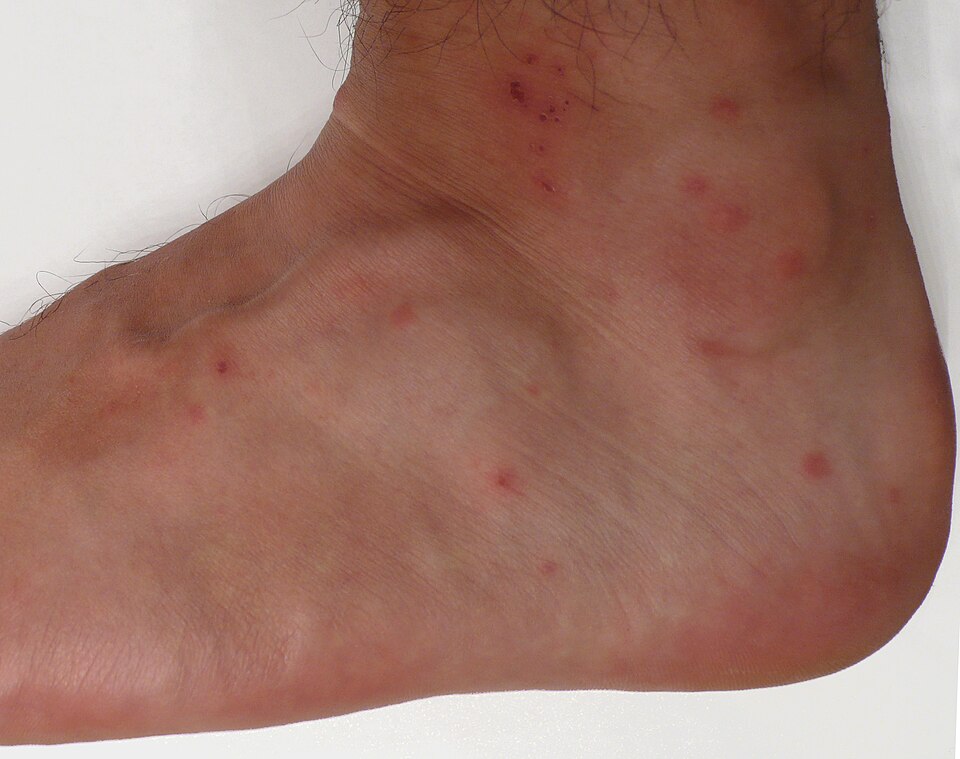
Chigger bites are small, raised, red welts, often with a brighter red dot in the center, that show up in clusters. The hallmark is where they appear: around the ankles, behind the knees, the waistline, and skin folds — anywhere clothing presses against skin. The itch is intense and usually starts within a day.
Why chigger bites itch so much
Chiggers are the tiny larval stage of a type of mite. They attach to the skin, inject digestive enzymes that break down skin cells, and feed on the liquified tissue. Your body's reaction to this is what causes the firm, red, intensely itchy bump — not the chigger itself.
Myth check: chiggers do not burrow into your skin or lay eggs in you. They attach, feed, and fall off — often before you even notice. There's nothing to "dig out," and covering bites with nail polish does not help.
Chigger bites vs. other bites
| vs. | Key difference |
|---|---|
| Flea | Fleas also cluster low on the legs, but chigger bites concentrate at tight clothing lines (waist, sock line). |
| Bed bug | Bed bugs bite in a line on the upper body overnight; chiggers cluster around constricted skin. |
| Mosquito | Mosquito welts are larger, puffier, and scattered; chigger welts are smaller and grouped. |
Compare them all in the full bug bite identification guide or the visual chart.
Not sure it's chiggers?
Snap a photo and the AI compares your bite against 1000+ species — with care tips for each result.
Identify my bite — free appHow to treat chigger bites
- Wash the area with soap and water as soon as possible — a hot shower helps remove any chiggers still attached.
- Apply an anti-itch cream (hydrocortisone) or calamine lotion.
- Take an oral antihistamine as directed for severe itching.
- Use a cool compress to reduce swelling and itch.
- Don't scratch — broken skin can become infected.
How to avoid chiggers
They live in tall grass, weeds, and wooded edges. Wear long sleeves and pants tucked into socks, use insect repellent on shoes and ankles, and shower promptly after being outdoors.
When to see a doctor
Most chigger bites clear up on their own. Seek care if a bite becomes increasingly painful, warm, swollen, or develops pus (possible infection), or if you have a severe allergic reaction.
FAQ
What do chigger bites look like?
Clusters of small, raised, intensely itchy red welts — often with a red dot in the center — usually where clothing fits tightly.
Do chiggers burrow into your skin?
No. They attach, feed, and drop off. They don't burrow or live under the skin, so there's nothing to dig out.
How long do chigger bites last?
The itch peaks in the first few days; welts can take 1–2 weeks to heal. Avoid scratching to prevent infection.