Bed Bug Bite Identification: Pictures, Pattern & What to Do
Educational only. Not medical advice. See a professional for severe reactions or signs of infection.
The single most useful clue for bed bug bites is the pattern: small itchy bumps in a line or zigzag, noticed when you wake up. Here's how to confirm it, rule out look-alikes, and what to do next.
In a hurry? Use our free bug bite identifier to identify the bite by photo in seconds, then read on for the details.
What do bed bug bites look like?
Bed bug bites are small, flat or slightly raised red bumps, often with a darker red center and sometimes a small whitish head. They're itchy and commonly appear in a line, row, or zigzag — the result of a single bug feeding along exposed skin. Reactions vary widely: some people show no marks at all, while others develop larger, hive-like welts. The bumps are usually firm, itchier than a mosquito bite, and slow to fade.
The bed bug bite pattern: line, zigzag & the "3-bite" cluster
The single most distinctive clue is the pattern. Bed bugs often bite three or more times in a row as they move along the skin, leaving a straight line or zigzag of evenly spaced bumps. People sometimes call this the "breakfast, lunch and dinner" pattern.
Do bed bugs always bite in a straight line? No. A line or cluster of 3+ is typical, but bites can also be scattered or appear singly, especially with a light infestation. A linear or clustered group on the upper body, noticed on waking, is the strongest tell — but pattern alone isn't proof. Confirm with physical signs of bugs (below).
Not sure if it's a bed bug line, a flea cluster or the "two dots" people blame on spiders? Compare the shapes side by side in our bug bite patterns guide (triangle, line, 4 dots and clusters).
How long do bed bug bites take to appear?
This trips a lot of people up. Reactions are delayed and vary by person: some see bumps within a few hours, others take several days to react, and some never develop visible marks at all. That delay is why bites are often noticed days after the first night of exposure, and why new bumps can keep appearing after you think the problem is gone.
What size are bed bug bites?
Most bed bug bites are small — roughly 2–5 mm (about ⅛ inch) across — though the surrounding red welt can swell larger in people who react strongly. Within a single cluster the bumps are usually similar in size to each other, which helps distinguish them from a random mix of bites from different insects.
Do bed bug bites have a white head?
They can. A typical bite is a raised red bump with a darker red or small whitish center. A genuine, persistent pus-filled white head — along with spreading redness, warmth, or increasing pain — points to infection rather than a normal bite, and should be checked by a doctor.
Where bed bugs bite on the body
Bed bugs feed on skin uncovered during sleep. The most common spots are the arms, hands, shoulders, neck, and face, but bites also turn up on the back, legs, ankles, and along the scalp hairline. Bites appearing overnight and concentrated on the upper body — rather than on the lower legs — lean strongly toward bed bugs over fleas.
Bed bug bites on arms: the classic picture
The arms are the most commonly bitten spot, because they're the part of you most likely to lie outside the covers all night. Pictures of bed bug bites on arms almost always show the same thing: a trail of small, similar-sized red bumps running in a line or zigzag along the forearm or upper arm — the path the bug walked while feeding.
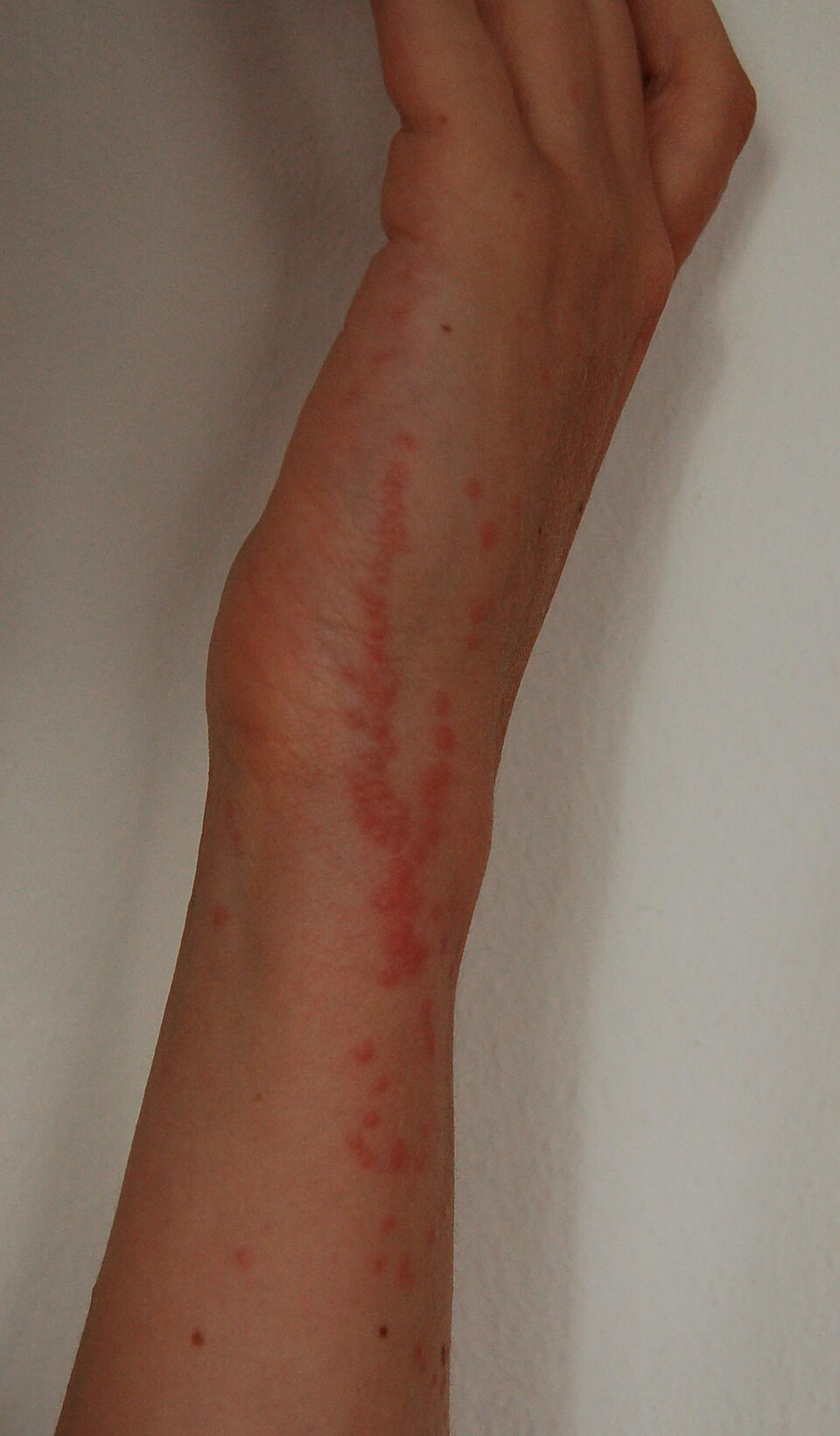
What to look for on your own arm: bumps of roughly equal size (2–5 mm), spaced a few centimeters apart in a rough row, all appearing at once and all about equally itchy. Scattered bumps of different ages and sizes on the arms point instead to mosquitoes or fleas.
Bed bugs vs. fleas, mosquitoes & chiggers
| vs. | Key difference |
|---|---|
| Flea | Fleas cluster around ankles and lower legs; bed bugs line up on the upper body. Flea bites have a tiny dark red center dot. |
| Mosquito | Mosquito welts are puffier, softer, and scattered randomly; bed bugs are smaller, firmer, and arranged in a line or cluster. Full comparison: bed bug bites vs. mosquito bites. |
| Chigger | Chiggers itch intensely around tight clothing lines (sock and waistband edges), not in neat rows on the arms, and often have a bright red center. |
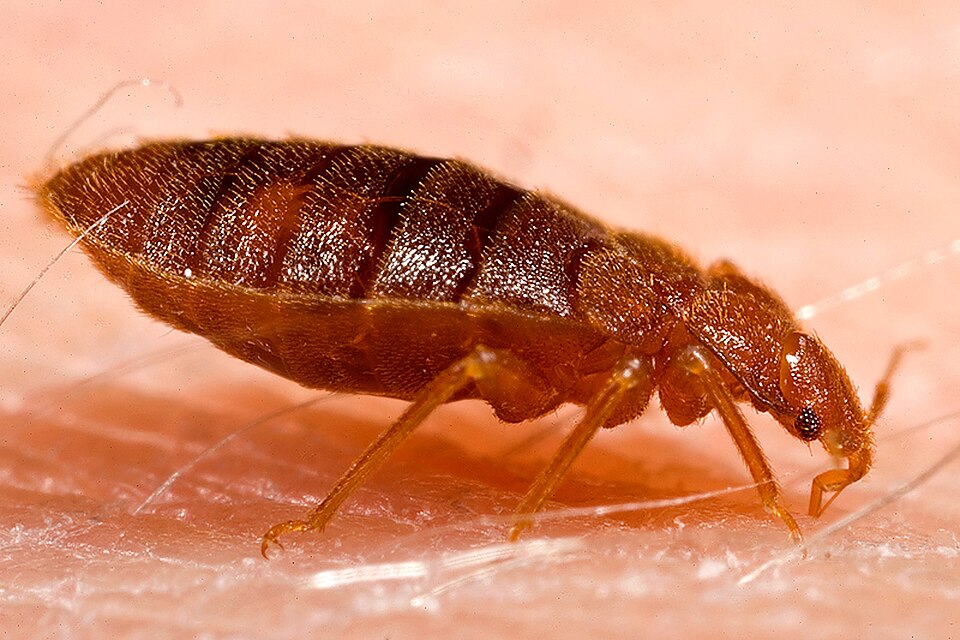
Confirm the infestation: check mattress seams, headboard, and box-spring for tiny rust-colored spots, shed skins, or live bugs the size of an apple seed. Bites alone aren't proof — these signs are.
Not sure it's bed bugs?
Snap a photo of the bite and the AI compares it against 1000+ species to help you identify it fast.
Identify my bite — free appHow to treat bed bug bites
- Wash with soap and water.
- Use an anti-itch cream (hydrocortisone) or oral antihistamine as directed.
- Apply a cold compress for swelling.
- Avoid scratching to prevent infection.
Then address the source — bed bugs won't stop until the infestation is treated. Wash bedding hot, vacuum thoroughly, and consider a pest-control professional.
When to see a doctor
Seek care for signs of allergic reaction, a bite that becomes increasingly painful or infected, or if scratching has broken the skin and it's worsening.
FAQ
What do bed bug bites look like?
Small itchy red bumps, often in a line or zigzag of three or more, usually on skin exposed during sleep. Many have a darker red center or a small white head.
What is the bed bug bite pattern? Do bed bugs bite in a straight line?
The classic pattern is a line, row, or zigzag of three or more bites close together — the "breakfast, lunch and dinner" pattern — because a bug feeds repeatedly along exposed skin. It isn't always a neat line, but a linear or clustered group on the upper body is a strong clue.
Do bed bug bites have a white head?
They can. Bites are usually a red bump with a darker red or small whitish center. A persistent pus-filled white head, spreading redness, or warmth can signal infection and should be seen by a doctor.
How big are bed bug bites?
Most are small, about 2–5 mm across, though the surrounding welt can swell larger if you react strongly. Bumps in one cluster are usually similar in size.
How long do bed bug bites take to appear?
It varies — some people react within hours, others take several days, and some never develop visible marks. This delay is why bites are often noticed days after exposure.
How do I know it's bed bugs and not fleas?
Bed bug bites line up on the upper body and appear overnight; flea bites cluster around the ankles. Check mattress seams for bugs or rust-colored spots to confirm.
Can you get bed bug bites on your scalp or face?
Yes. Bed bugs bite any skin exposed during sleep, including the face, neck, and scalp along the hairline, though arms and shoulders are most common.
What do bed bug bites on arms look like?
A trail of small, similar-sized red bumps in a line or zigzag along the forearm or upper arm — the path the bug walked while feeding. Arms are bitten most because they lie outside the covers. A row of 2–5 mm itchy bumps down one arm, noticed on waking, is the classic picture.
How long do bed bug bites last?
Usually 1–2 weeks. Ongoing new bites mean an active infestation that needs treatment.