Spider Bites in the UK: Pictures, False Widow & When to Worry
Educational only. Not medical advice. See a professional for severe reactions or signs of infection.
Good news first: the UK has no established widow or recluse spiders, the two groups behind most serious spider bites worldwide. A handful of British spiders can bite, the noble false widow above all, but bites are uncommon and usually feel like a bee or wasp sting. Here's what UK spider bites look like, pictures of the spiders involved, how to treat a bite and the signs that mean you should get help.
Got a photo of the bite or the spider? Our free bug bite identifier can help you work out what it was.
The quick answer
A sharp sting, then a red, swollen bump that settles over a few days is the usual UK spider bite, most often from a false widow. Clean it, cool it and keep an eye on it. Get help if it keeps getting worse, looks infected or you feel unwell, and call 999 for any breathing trouble or swelling of the face or throat.
What a spider bite looks like in the UK
Most UK spider bites look like an ordinary insect bite: a small red bump with some swelling, sometimes with one or two tiny puncture marks in the middle. Unlike many insect bites, spider bites often hurt at the moment they happen, then ache or itch as the swelling builds.
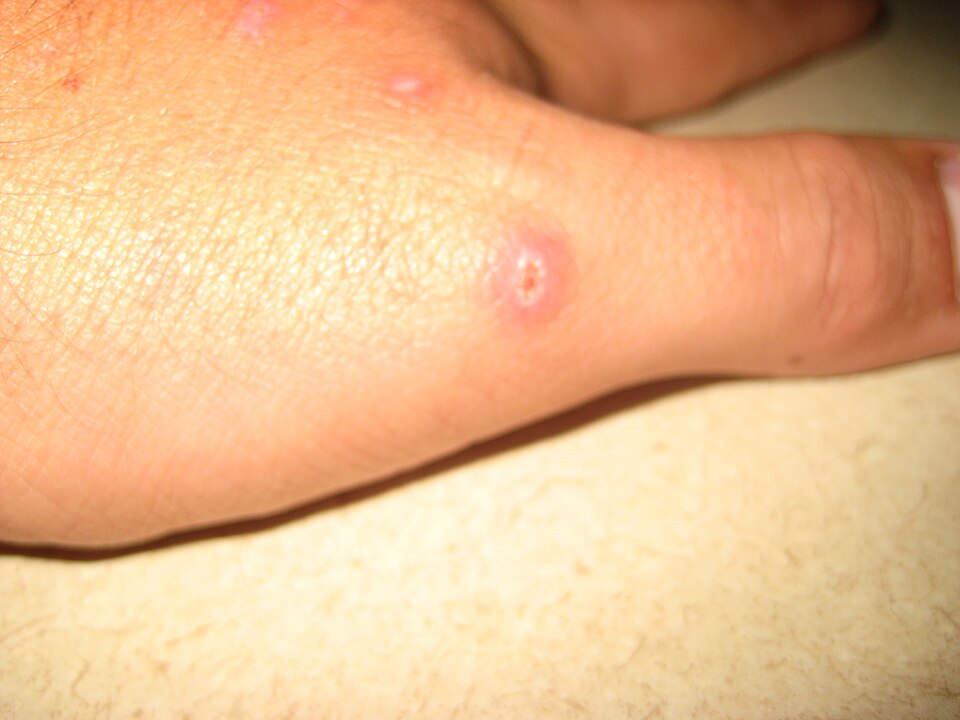
A small mark, sometimes with two tiny dots.
Swelling and soreness, like a bee sting.
Redness and swelling fade.
Spreading redness, pus or fever.
For a day-by-day look at bite stages in more detail, see the spider bite stages guide.
False widow spiders (the one people worry about)
The noble false widow (Steatoda nobilis) is the UK spider most often linked to bites. It isn't native: it originally came from the Canary Islands and Madeira and has lived in southern England for well over a century, spreading further north and into Ireland in recent decades.
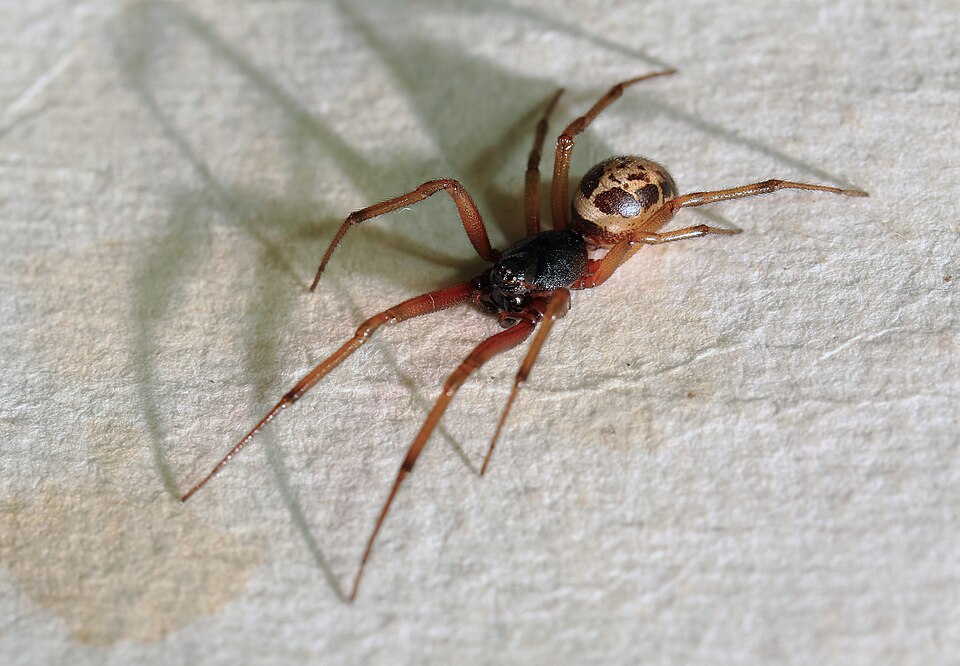
How to recognise it: a shiny, round, brown body with cream or pale markings on the back, and reddish-brown legs. Despite the name, it is not a black widow and has no red hourglass. It's often found around window frames, sheds, conservatories, garages and fences, and sometimes indoors.
What a false widow bite is like: bites are uncommon and usually happen when the spider is trapped against skin, for example in clothing or bedding. Most cause sharp pain, redness and swelling similar to a bee sting, which settle on their own. Some people get more pain or swelling, and as with any break in the skin, the bite can become infected. Serious reactions are rare.
Two smaller relatives, the cupboard spider (Steatoda grossa) and the rabbit hutch spider (Steatoda bipunctata), are also called false widows. They bite far less often.
House spiders and cardinal spiders
The big, fast, long-legged spiders that run across the floor in late summer and autumn are usually giant house spiders (Eratigena species) or the even larger cardinal spider (Tegenaria parietina). Most of the ones you see indoors at that time of year are males wandering in search of a mate.
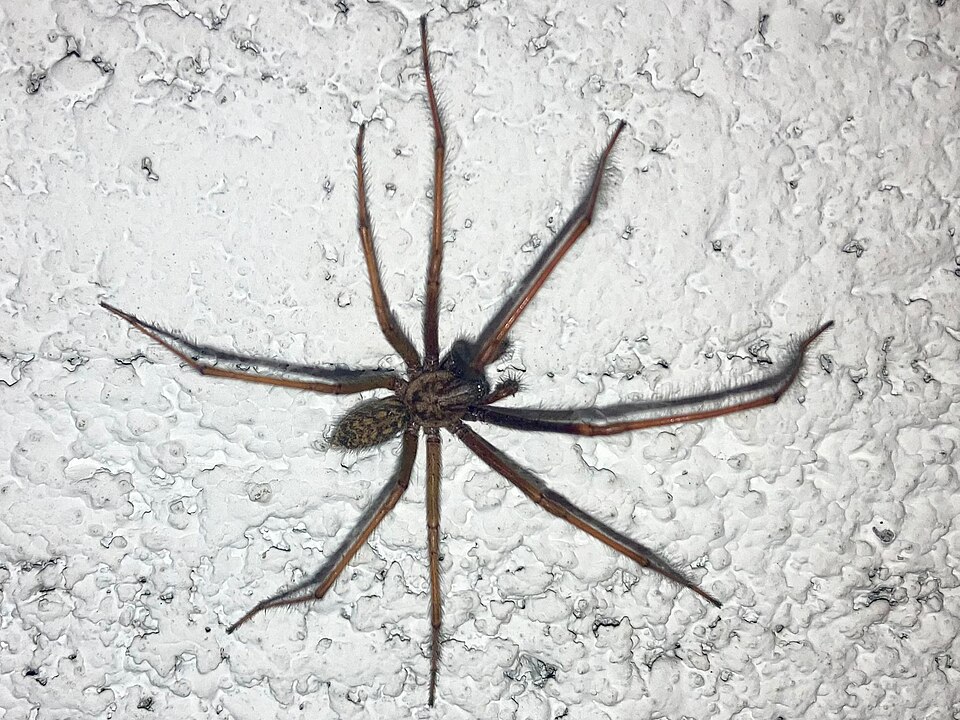
They look alarming, but they're shy and rarely bite people. If one does, expect a brief, mild pain and a small red mark that fades quickly.
Other UK spiders that can bite
- Woodlouse spider (Dysdera crocata): orange-red front half, pale body and large fangs. It can bite if handled; the pain is sharp but short-lived.
- Tube-web spider (Segestria florentina): a dark spider with metallic green fangs that lives in holes in walls. Its bite is painful at first but usually settles quickly.
- Mouse spider (Scotophaeus blackwalli): grey and velvety, active at night indoors. Bites are uncommon and mild.
Common garden spiders, such as the cross spider in its web, very rarely bite people at all.
Found the spider?
Take a photo and the app identifies the spider itself, with a danger rating and key facts, so you know whether to worry.
Identify the spider — free appUK spider bite identification chart
| Spider | What it looks like | Where you'll meet it | Bite |
|---|---|---|---|
| Noble false widow | Glossy, round brown body with cream markings; reddish legs | Window frames, sheds, conservatories, fences | Sharp pain, redness, swelling, like a bee sting |
| Cupboard / rabbit hutch spider | Smaller, dark, round-bodied false widows | Cupboards, sheds, outbuildings | Rare; mild pain and redness |
| Giant house / cardinal spider | Large, brown, hairy, very long legs | Indoors in late summer and autumn | Rare; brief mild pain |
| Woodlouse spider | Orange-red front, pale body, big fangs | Under stones, logs, in gardens | If handled; sharp, short-lived pain |
| Tube-web spider | Dark, with metallic green fangs | Holes and cracks in walls | Painful at first, settles quickly |
The bite alone rarely tells you which spider it was. Seeing the spider is the best clue. For bites outside the UK, including widow and recluse spiders, see the main spider bite identification guide.
Is it even a spider bite?
Many bites blamed on spiders are actually from fleas, mosquitoes, midges, bed bugs or other insects, and some sore red lumps are skin infections rather than bites. Clues that point away from a spider:
- Several bites, in a cluster, line or triangle: spiders usually bite once. See bug bite patterns.
- Very itchy rather than painful bumps on the ankles or legs, which suggests fleas or midges.
- A red lump that grows and fills with pus over days, which can be an infection. Get it checked.
How to treat a spider bite
Most UK spider bites can be treated at home:
- Wash the bite with soap and water.
- Cool it with a cold compress or an ice pack wrapped in a cloth for around 10 minutes.
- Raise the bitten arm or leg if it's swollen.
- Try not to scratch, to lower the chance of infection.
- Ask a pharmacist about painkillers, antihistamines or a cream for itching and swelling.
When to worry
Ask a pharmacist, contact your GP or call NHS 111 if:
- The bite is getting worse instead of better after a day or two.
- A large area around the bite becomes red, hot and swollen.
- You see signs of infection: pus, increasing pain, or redness that spreads or forms red streaks.
- You have a high temperature, feel shivery or generally unwell.
- The bite is in your mouth, throat or near your eyes.
Call 999 or go to A&E if you or someone else has trouble breathing, swelling of the face, lips, tongue or throat, a fast heartbeat, feels dizzy or faint, or becomes confused after a bite. These can be signs of a severe allergic reaction.
FAQ
What does a spider bite look like in the UK?
Usually a small red, swollen bump, sometimes with one or two tiny puncture marks. It often stings or aches at first, like a bee or wasp sting, then settles over a few days. Many bites blamed on spiders are from other insects.
Are there dangerous spiders in the UK?
The UK has no established widow or recluse spiders. A few UK spiders can bite, most notably the noble false widow, but bites are uncommon and usually cause local pain, redness and swelling that settles on its own.
How do I know if I've been bitten by a false widow spider?
Expect sharp pain at the moment of the bite, then redness and swelling like a bee sting. You usually can't confirm it from the bite alone; the best clue is seeing the spider, with its glossy, round brown body and cream markings.
Do house spiders or cardinal spiders bite?
Rarely. They look alarming and turn up indoors in autumn, but they're shy. A bite usually causes brief mild pain and a small red mark.
When should I see a doctor about a spider bite in the UK?
Ask a pharmacist, your GP or NHS 111 if the bite is getting worse after a day or two, a large area is red and swollen, it looks infected, or you have a fever. Call 999 for trouble breathing, swelling of the face, lips or throat, or feeling faint.